Getting Paid as an Afghan Freelancer: What Actually Works
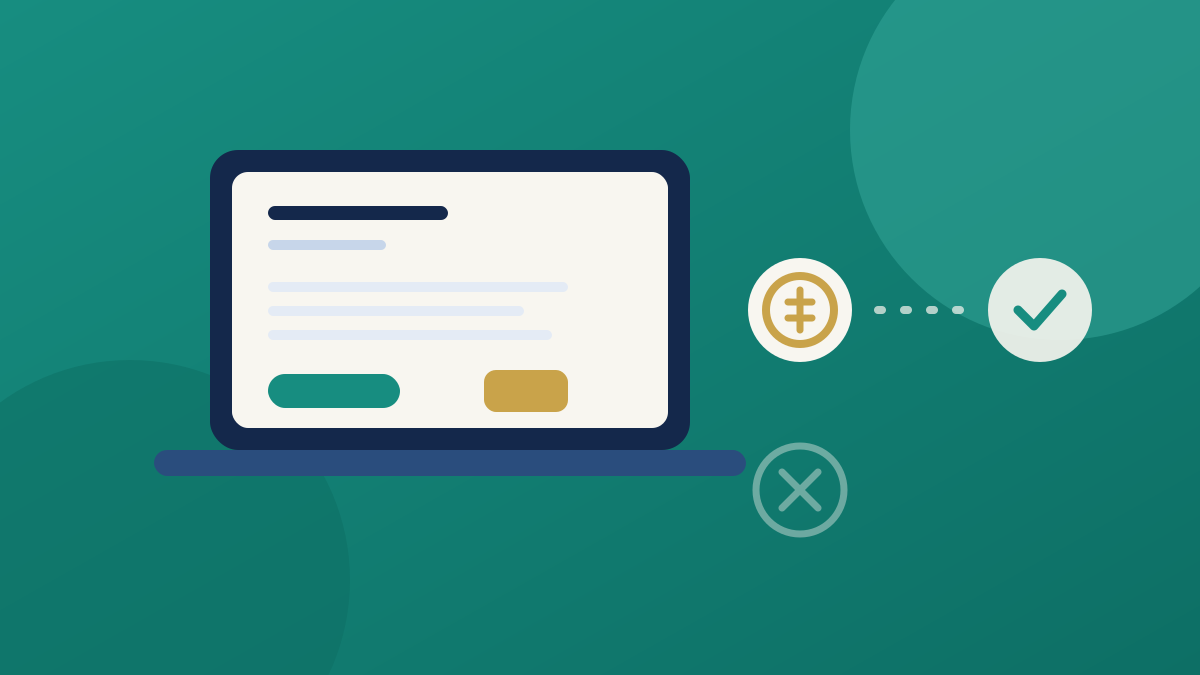
Finding the client is the easy half. Here is how to receive your money, and the scams that target this exact problem.
I have watched capable designers and developers give up freelancing not because they could not find work, but because they could not collect payment for it. This is a solvable problem, but only if you plan for it before you accept the job.
Decide your payment route before you send a proposal. Never take work first and hope to work it out afterwards — that is the position clients exploit, and it is the position scammers look for.
Ask for a deposit. Thirty to fifty percent before you begin is standard professional practice everywhere, and it tests whether a client is real. A client who refuses any deposit on a first project is telling you something useful.
Be careful with anyone who wants to pay you more than you asked, or wants to send money through an unusual route and have you forward part of it. That is a well-known fraud, and it is aimed at freelancers in exactly our situation.
Keep records: a signed scope, an invoice for every payment, and screenshots of every agreement. If a platform dispute happens, documentation decides it. Our freelancing course includes the current, tested payment guide, updated every quarter because these options change.
Keep reading with us
One email a week: a new course, a study tip and a Kankor practice question.